California is moving closer to new wildfire regulations governing the first five feet around homes in high fire-risk areas.
Known as “Zone Zero,” the proposed rules are designed to create an ember-resistant area immediately surrounding a home. For some Ventura County homeowners, that could eventually mean removing combustible landscaping, trimming trees, modifying wooden fences and making changes to sheds or other structures near the house.
Importantly, the regulations are not yet in effect.
What Is Zone Zero?
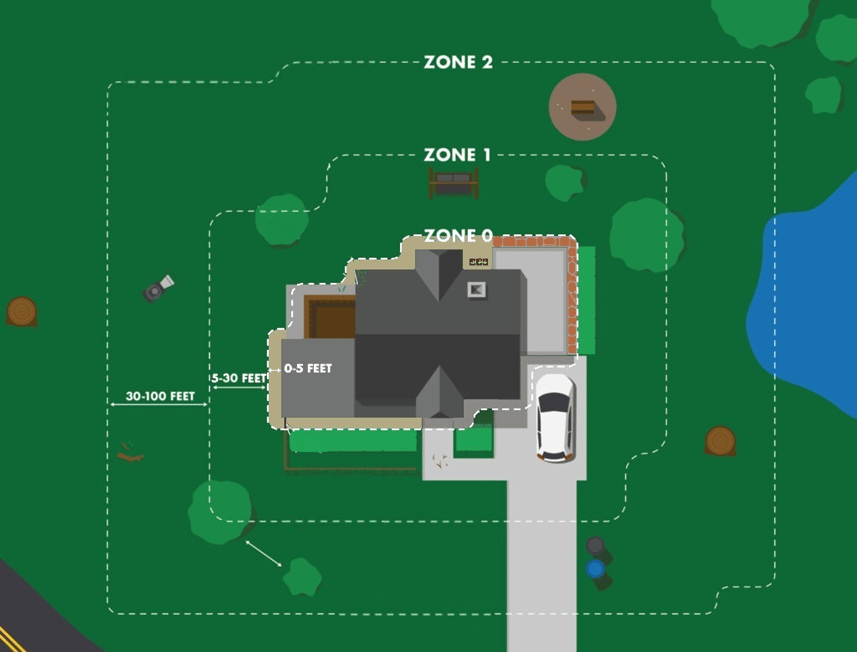
California already requires defensible space around many homes in wildfire-prone areas. Zone Zero would specifically regulate the area extending from a structure out five feet, where combustible materials can provide a pathway for fire to reach a home.
The concept stems from AB 3074, legislation passed in 2020 directing the state to establish an ember-resistant zone around structures in designated wildfire areas.
The California Board of Forestry and Fire Protection approved the final draft of the regulations in August 2026. They would generally apply to properties in State Responsibility Areas and Very High Fire Hazard Severity Zones within Local Responsibility Areas.
That includes properties in some of Ventura County’s hillside and other high fire-risk neighborhoods.
What Would Homeowners Have to Change?
The regulations would be phased in over several years.
The first phase focuses primarily on removing combustible materials within five feet of a structure, including:
- Bark mulch and wood chips
- Firewood
- Dead leaves, branches and vegetation
- Other combustible ground cover and debris
Those materials could be replaced with noncombustible alternatives such as gravel, rock or decomposed granite.
Trees would also need to be maintained near structures. Branches would need to be kept away from roofs, eaves and chimneys, and dead wood and certain lower limbs would need to be removed.
The First Foot Would Be Even More Restrictive
The area immediately next to the house would eventually face stricter requirements.
Within the first foot of a structure, or to the outer edge of an eave, small woody plants and other combustible materials would generally not be permitted. Combustible planters would also need to be removed, while permitted potted plants would need to be easily movable and placed in noncombustible containers.
For homeowners with landscaping beds running directly alongside their house, this could require some significant changes.
Wooden Fences and Sheds Could Also Be Affected
Zone Zero goes beyond landscaping.
Under Phase Two, wooden fencing attached directly to a home would need to be separated from the structure with a noncombustible metal gate or section.
Wooden sheds and other outbuildings located within the five-foot zone would also need noncombustible exterior walls and roofs.
These could be among the more costly requirements for homeowners whose properties currently have wooden improvements immediately adjacent to their house.
When Would Zone Zero Take Effect?
As of August 2026, the regulations are not yet in effect.
The Board of Forestry and Fire Protection approved the final draft on August 19, but it must still go through the state regulatory process, including review by the Office of Administrative Law.
Once an effective date is established, existing homeowners would have time to comply. Initial Phase One requirements are expected to take effect within three years, with additional Phase Two requirements following later.
New construction could be subject to Zone Zero requirements much sooner, potentially beginning when the regulations become effective.
What About Homeowners Insurance?
Zone Zero could also become increasingly important for homeowners insurance.
Some California homeowners are already encountering similar wildfire mitigation requirements from insurers, including concerns about vegetation, overhanging trees and combustible fencing near structures.
As insurers continue evaluating individual properties for wildfire risk, homeowners could encounter Zone Zero-style requirements from their insurance company even before the state's compliance deadline.
How the statewide regulations ultimately affect insurance availability and premiums remains to be seen.
What Should Ventura Homeowners Do Now?
First, determine whether your property is located within an affected fire hazard area. CAL FIRE maintains Fire Hazard Severity Zone maps that homeowners can use to check their property.
There is no need to start ripping out landscaping simply because the Board of Forestry approved the regulations.
However, homeowners in Ventura County’s high fire-risk areas may want to keep Zone Zero in mind when making improvements now.
If you're already replacing landscaping, building a fence or adding an accessory structure near your house, understanding the proposed requirements could help you avoid installing something that may need to be changed later.
For Ventura homeowners, this is particularly worth watching as the state finalizes the regulations and establishes the compliance timeline.